WeWork, the flexible office space aggregator and global giant, has experienced a number of ups and downs during its lifecycle.
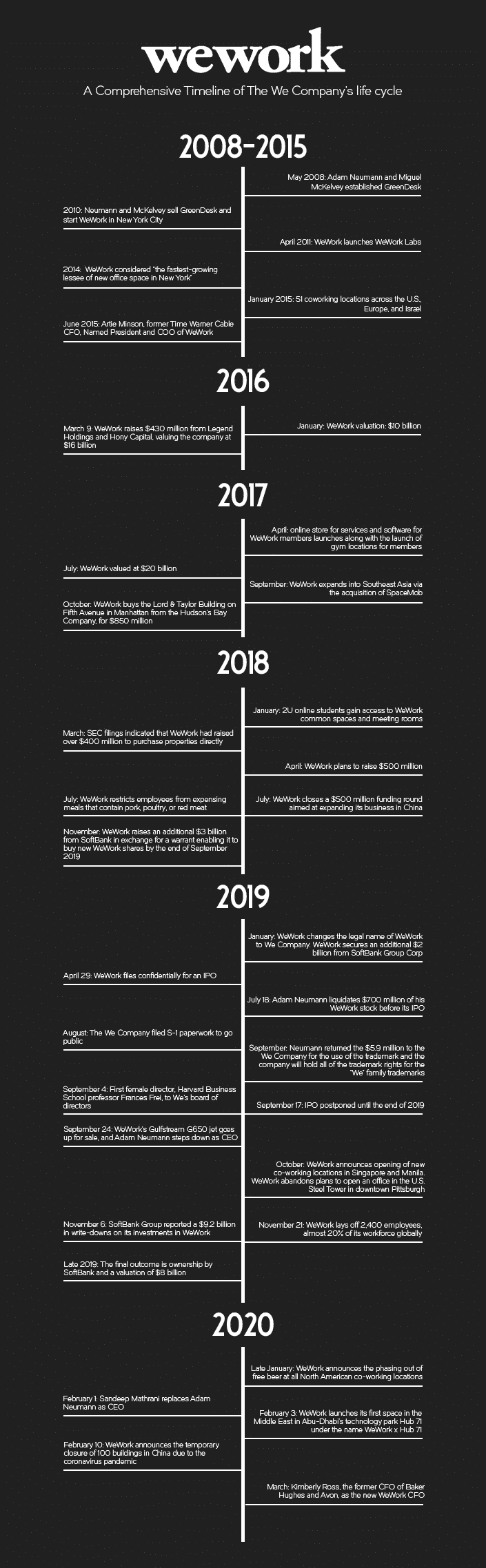
The product of Adam Neumann and Miguel McKelvey selling their joint company, GreenDesk, in 2010, WeWork launched in New York City. By 2014, it was considered "the fastest-growing lessee of new office space in New York" where it continued this upward trajectory.
In January 2016, it was valued at $10 billion. By March of that year, its valuation spiked to $16 billion.
Since then, WeWork has expanded globally, began offering its members perks like gyms in its locations, meeting and lounge spaces for students and individuals, and expanding its influence in major cities across the country.
2019 was its busiest year to date, but not for good reasons.
WeWork started the year off with legally changing its name to The We Company. A couple of months later, it began plans to go public, something that was highly anticipated by investors with high confidence in such a unique company. Unfortunately, two months after that, Neumann liquidates $700 million of his WeWork stock. The company continues plans to go public though, filing S-1 papers a month after the liquidation.
In November of 2019, The We Company announces the postponement of its IPO to the end of the year.
The company then sells its Gulfstream G650 jet, a plane famously known for its Neumann led parties, something that brought a shadow over the company’s reputation. Neumann then makes the decision to step down as CEO.
By the end of 2019, Softbank has bailed out The We Company and the pandemic begins its spread across the world.
Currently, The We Company has had to close a number of buildings, laying off staff, and cutting wages. The company had already lost a number of employees after its IPO plans fell through. Instead of looking for new ways to continue to offer its services while supporting social distancing, the company has been looking for funding from partners and offering discounts to eke out revenue where it can.
WeWork is a company that started out strong and unique. Offering a service that was new and exciting to both the growing gig economy and to small businesses, alike. When it comes to workspaces, what WeWork offers is an ideal that represents a lush and hip work ethic.
The pandemic has put a damper on that market but the company had begun struggling before the virus started its spread. Here is a comprehensive timeline of the birth, life, and current struggles of The We Company.

The Real Deal has reported that executives at Compass have lobbied top agents in New York City to temporarily remove...
Read More
Zillow has signed a modernised data licensing agreement with Realtracs, the Nashville-based MLS serving more than 20,000 agents across six...
Read More
Here's the best of this week's product and service updates around the world... Europe: Scout24 to help landlords set...
Read More
Here's what we've spotted in this week's personnel merry-go-round... North America: Zillow reshuffle means CFO takes on COO role...
Read More